

 Facebook
 X
 Pinterest
 Copy Link
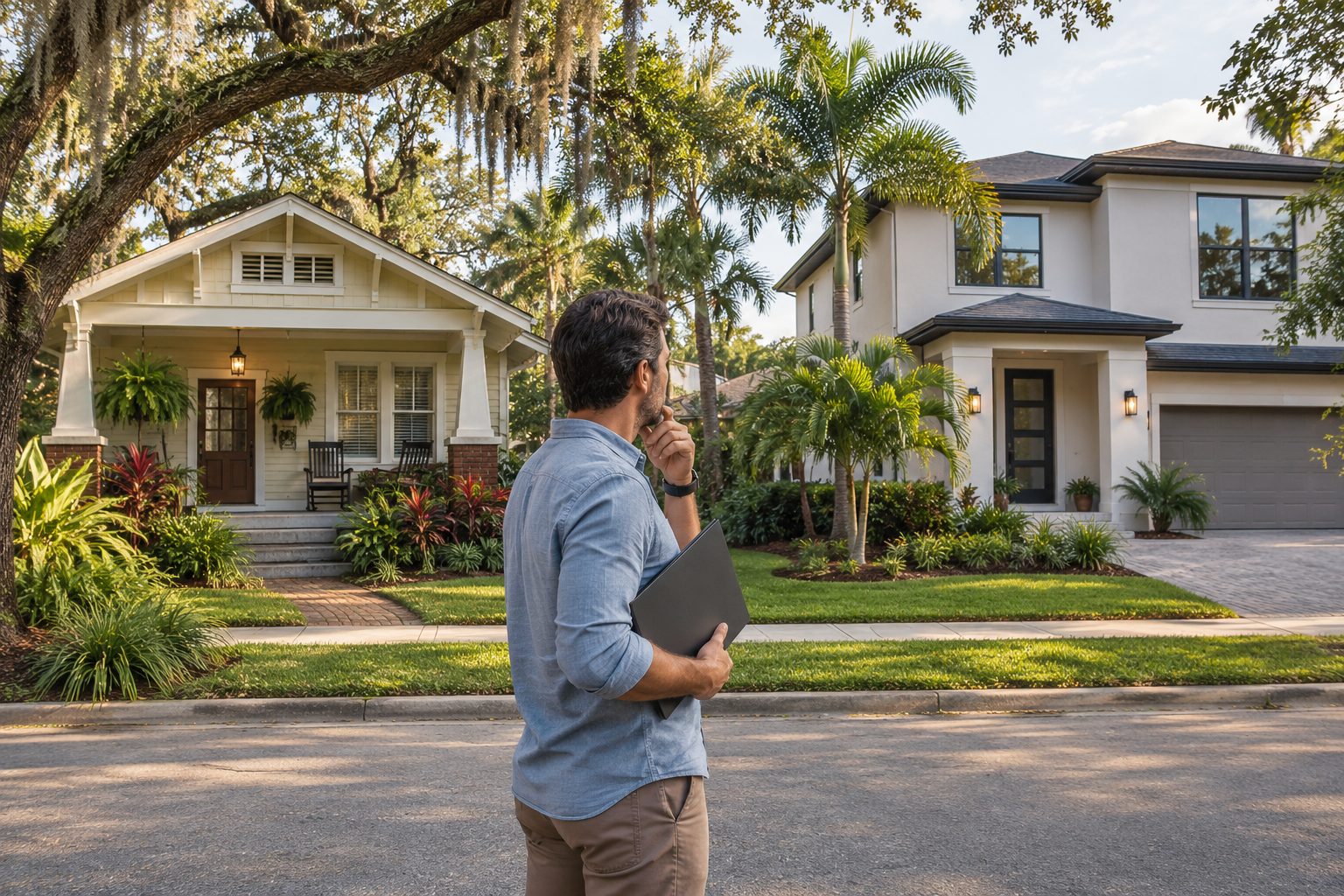
Older or Newer? How to Choose the Right Tampa Bay Home
By Andrew Ricker | The Ricker Group
Reviewed November 3, 2026
Should you buy an older home or pay more for a newer one? My advice? Start with the location first.
The layout, condition, and costs that fit your life come shortly after, but your primary focus should be location. Once you find the neighborhood you want to live in, the rest will fall into place. The year built matters, but it won’t answer the whole question.
In Tampa Bay, compare the actual homes with your Realtor to help decide if newer means easier, or does older mean better value?
Separate the house from the location
Maybe an older South Tampa home puts you near the places you visit every week. A newer home elsewhere might offer the garage, storage, or floor plan you’ve been missing.
Really think about and even write down what your life looks like on a normal day to day basis and what areas of your house you use regularly. A large kitchen may matter if you regularly cook and host. An extra room “for the visitors” you rarely have may matter much less. Be realistic.
Then consider what you cannot easily change: the street, lot, traffic, and distance from work or family. Try the drive at the times you would actually make it. If your search crosses into St. Petersburg or other parts of Pinellas, include the bridge trip when it applies.
Ask your Realtor to help separate your must-haves from features that simply look good during a showing.
Compare the age of the systems
An older house can have a recently replaced roof, updated wiring, and a newer AC system. Meanwhile, a newer resale home can still have maintenance needs.
Request a simple list of major components:
- Roof installation date and available records.
- AC and water-heater ages.
- Electrical and plumbing updates.
- Window and exterior-door information.
- Known repairs and supporting documents.
Treat unknown dates as questions to resolve, rather than assuming everything matches the home’s construction year.
For insurance, those details matter. The Florida Department of Financial Services explains that insurers consider factors including construction, roof age and type, location, and wind-mitigation features when reviewing a home.
Look beyond the fresh finishes
A renovated kitchen can be a great feature. It doesn’t tell you whether the roof, plumbing, or other systems received the same attention.
Ask what “updated” means. Was the work limited to cabinets and counters? Did it include electrical or plumbing changes? Are invoices, permits, and inspection records available?
Your Realtor can help organize those questions and identify the right professionals to answer them.
For homes within Tampa city limits, City of Tampa Construction Services handles building permits and inspections. Hillsborough County Development Services serves unincorporated Hillsborough County. A Tampa mailing address alone doesn’t establish which office handles the property. City of Tampa
Give newer construction a careful review
New construction still deserves questions about workmanship, drainage, finishes, and what the purchase includes. You may be getting a great mortgage interest rate, but do you like where you live? Parrish/Palmetto is a short drive from St Pete, but often times it takes 1-2 hours to commute to Tampa with traffic.
Most builders offer a 1-2-10 warranty. Make sure you have the terms as part of your buyer packet. Check who handles claims, what the warranty covers, and how long each part lasts. Typically everything is covered for the first year – and you have 10 years for the structural items.
The Federal Trade Commission’s new-home warranty guide explains that builder warranties generally provide limited coverage for specified components. Coverage periods and exclusions vary. Consumer Advice
A warranty and an inspection serve different purposes. Discuss inspection access and timing with your Realtor before signing, especially when construction is still underway.
Compare the first year—not just the asking price
Your Realtor should be able to help build a budget for your finalists. This will include estimated insurance, taxes, association charges where applicable, immediate repairs, and changes you would make before/after moving in.
Use property-specific information from your insurance agent, lender, and other relevant professionals. Don’t assume the seller’s costs will become yours.
An older home with documented updates may work better for your budget than expected. A newer home may justify its price through a layout you won’t need to change. Let the details guide that decision.
Common questions
Does an appraisal replace a home inspection?
No. The Consumer Financial Protection Bureau distinguishes an appraisal from an inspection and recommends arranging an independent inspection early enough to address concerns. Consumer Financial Protection Bureau
Is an older home automatically more expensive to insure?
Age alone won’t tell you the premium. Ask an insurance agent to evaluate each property’s condition, construction, and available coverage.
Should I pay more for a move-in-ready home?
Possibly—if the features and documented condition justify the difference for you. Compare that premium with realistic repair costs, time, and location.
You don’t need to choose a favorite construction decade. You need a home that fits your life and a clear understanding of what comes with it.
Talk with Andrew Ricker to help decide on older vs newer homes in Tampa Bay.
