
 Facebook
 X
 Pinterest
 Copy Link
Buying in a Tampa Flood Zone: What Should You Check Before Making an Offer?
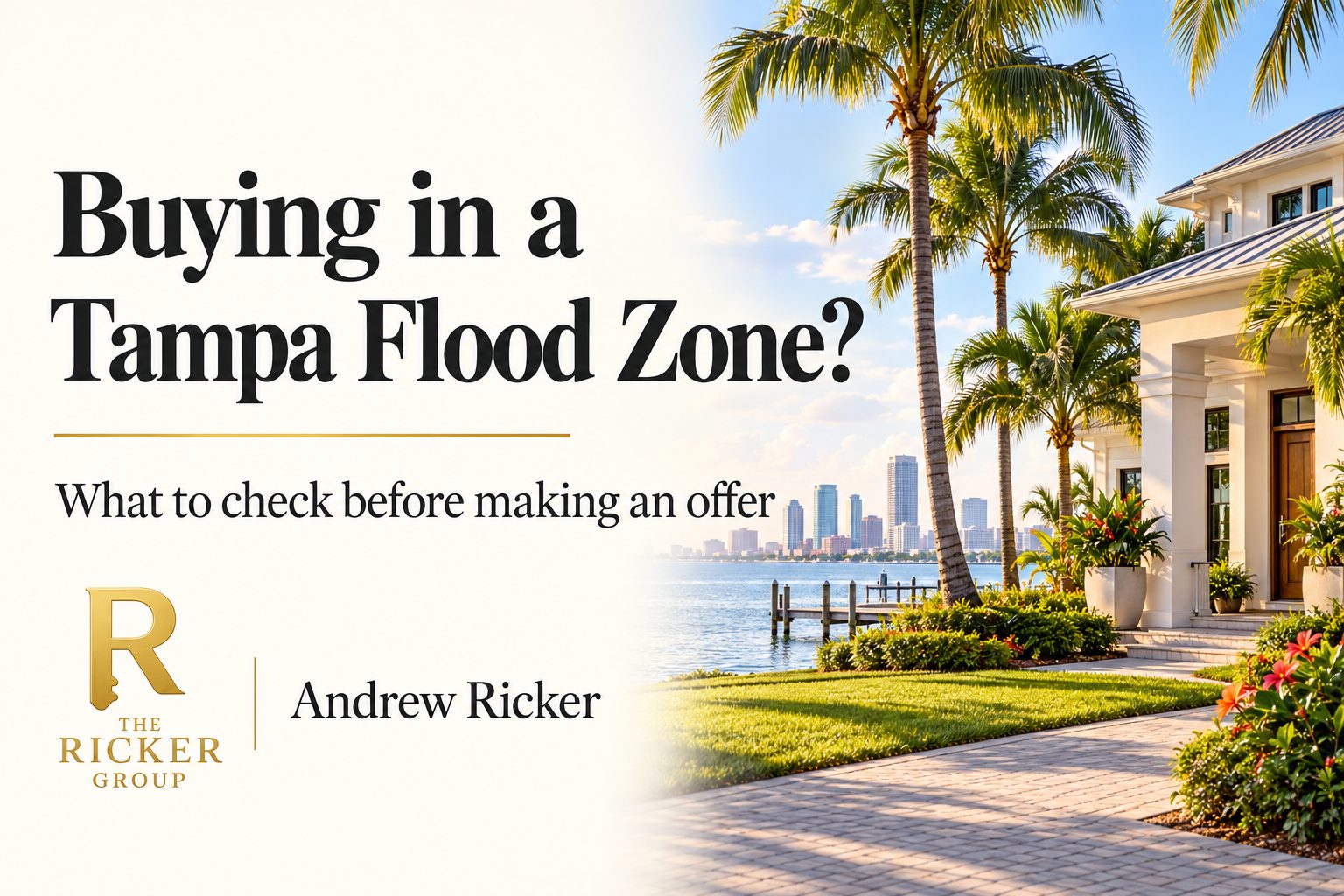
Buying in a Tampa Flood Zone: What Should You Check Before Making an Offer?
By Andrew Ricker | The Ricker Group
Reviewed October 12, 2026
Before buying a Tampa home, ask your Realtor to help you identify the property’s flood zone, evacuation zone, insurance considerations, available records, and questions for qualified professionals. A map designation is an important starting point, but it does not tell the property’s entire story.
Flood zones and evacuation zones are different
These terms are often used as though they mean the same thing.
A flood zone reflects the risk of flooding from sources such as heavy rain, rising water, or storm surge. An evacuation zone identifies areas that officials may order to evacuate during a hurricane.
The City of Tampa explains that a home can be in a lower-risk flood zone and still be in an early evacuation zone—or the reverse. Hillsborough County’s evacuation zones are labeled A through E. City of Tampa
Ask your Realtor to help verify both designations for the property. If the home is outside Tampa city limits, use the appropriate county or municipal resources.
Start with the official flood maps
For properties in Hillsborough County, begin with the county’s flood map resources.
The county explains that FEMA Flood Insurance Rate Maps help determine federal flood-insurance and building requirements. It also maintains county floodplain maps based on watershed studies. Those maps serve different purposes and may not show identical information. Hillsborough County, FL
Your Realtor can help locate the available records, but questions about map interpretation, elevation, building requirements, or future construction should go to the appropriate floodplain official, surveyor, insurer, or other qualified professional.
Request an insurance quote early
Do not wait until the final days of the transaction to investigate insurance.
Ask an insurance agent to review the specific address, construction type, roof information, and available inspections. The Florida Department of Financial Services explains that insurers may consider the home’s age, roof, plumbing, electrical system, HVAC equipment, location, construction, and condition.
An insurer may also request a four-point inspection for an older home. That report addresses the roof, plumbing, electrical system, and heating and air-conditioning system. Florida Department of Financial Services
Your Realtor can help gather information. Your insurance agent decides what is needed for a quote and whether the home meets a carrier’s guidelines.
Understand what homeowners insurance excludes
Standard homeowners coverage and flood coverage are different.
The Florida Department of Financial Services states that homeowners policies do not cover flood damage. Flood insurance is commonly written as a separate policy, although some private insurers may offer it as an endorsement. A lender may require flood coverage depending on the property and loan. Florida Department of Financial Services
Ask the insurance agent what the proposed policies cover, what they exclude, and which deductibles apply. A premium estimate alone does not explain the quality of the coverage.
Look beyond the map label
Discuss the property’s physical setting with your Realtor.
Questions may include:
- Is the structure elevated above the surrounding land? Not every AE flood zone home has the same elevation.
- When was the property built? This has an impact on the likelihood of flooding.
- Are there drainage features, nearby waterways, or low areas? Culbreath Isles is much lower than Palma Ceia and has a higher chance of flooding.
- Are permits or elevation documents available?
- Has the seller provided information about past flooding or insurance claims?
- Could planned renovations trigger additional review?
A home’s current flood-zone designation should not be treated as a guarantee that flooding will or will not occur.
Common questions
Does Flood Zone X mean flood insurance is unnecessary?
It means the property is outside FEMA’s highest-risk zones, but it does not mean there is no flood risk. Discuss optional coverage and pricing with an insurance agent.
Can my Realtor tell me what flood insurance will cost?
Your Realtor can help gather property information, but the quote should come from an insurance professional after reviewing the specific home and buyer.
Should I reject every home in a higher-risk flood zone?
That is a personal risk and budget decision. Review the property, available records, coverage, cost, and professional advice before deciding.
Buying in South Tampa involves more than finding the right floor plan. Talk with Andrew Ricker about organizing the right questions before you make an offer.
Andrew Ricker | The Ricker Group
Tampa Bay Real Estate · South Tampa Local
What Should You Fix Before Selling Your South Tampa Home?
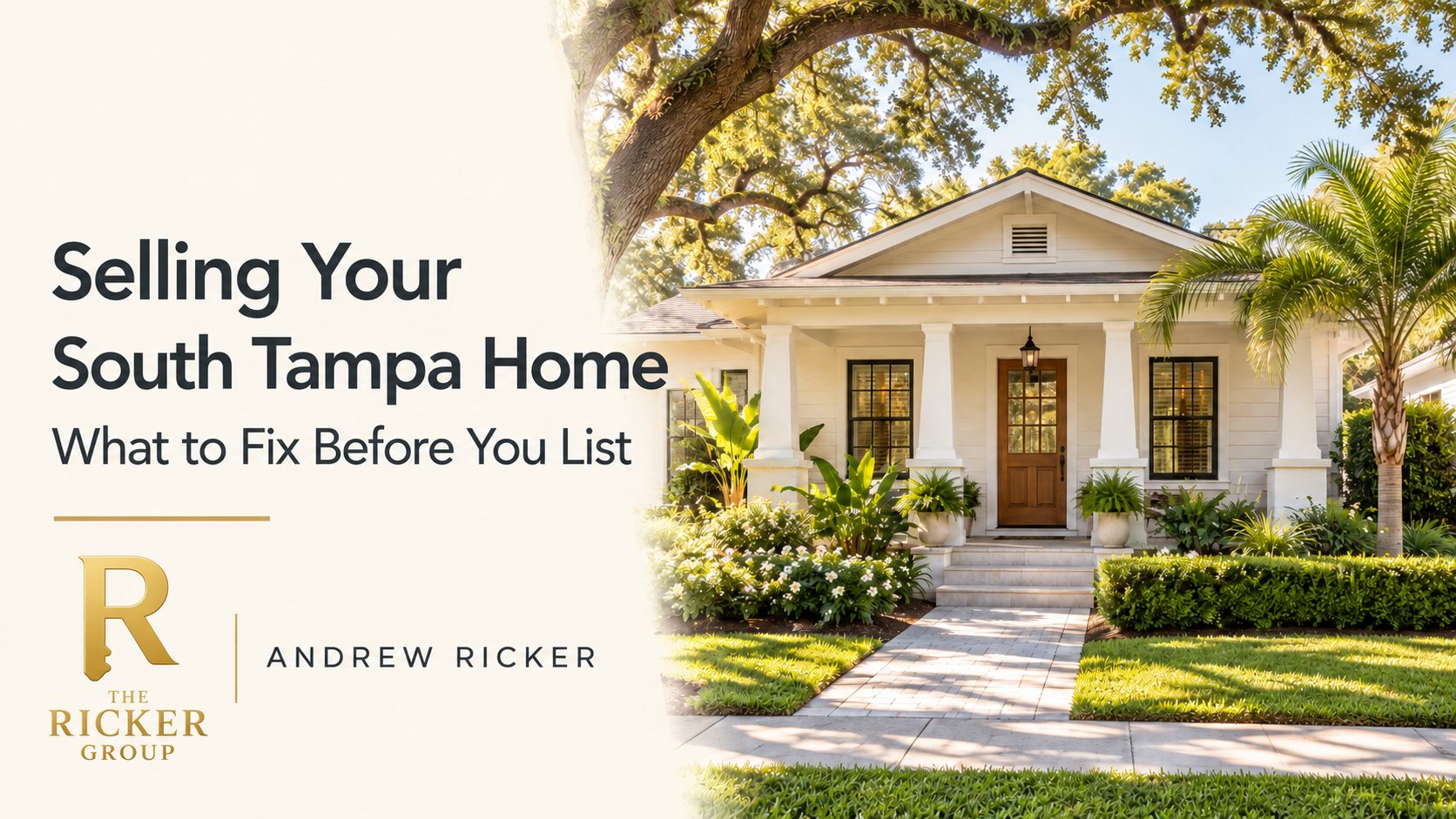
Before selling your South Tampa home, prioritize necessary repairs, visible maintenance, and a clean, well-presented space. Major renovations deserve a closer look at your likely sale price, competing listings, budget, and timing before you commit.
You don’t need to make every room brand-new. You need a thoughtful plan for where your time and money will do the most good.

Selling Your South Tampa Home: Where to Start
Walk through your home as though you’re seeing it for the first time. Look for dripping faucets, damaged trim, sticking doors, stained ceilings, and other unfinished maintenance.
Separate your list into three groups:
1. Problems that need professional evaluation.
2. Small repairs you can address before photography.
3. Cosmetic changes that are optional.
If you see signs of an active leak or another unresolved problem, investigate the cause before making cosmetic repairs. Painting over a stain is not a substitute for understanding why it appeared.
Make the entrance feel cared for
Your front entrance is a manageable place to focus your preparation budget.
Consider cleaning the walkway, trimming landscaping away from the entrance, washing the front door, and replacing a worn doormat. Check that exterior lights work and that your house numbers are easy to read.
For a South Tampa home with a porch or outdoor sitting area, arrange the space so buyers can understand how they might use it. A couple of appropriately sized chairs may communicate more than a crowded collection of furniture and decorations.
Clean and simplify before replacing
Before deciding that a room needs a renovation, see what cleaning and editing can accomplish.
Clean windows, clear countertops, organize storage areas, and remove furniture that makes it difficult to move through the home. Pay particular attention to kitchens, bathrooms, and pet odors.
If walls are heavily marked or painted in very personal colors, consider whether touch-ups or a fresh coat of paint would improve the presentation. There’s no requirement to repaint every room the same color.
The goal is to help buyers see the home’s space, condition, and features clearly.
Evaluate big projects against comparable homes
Should you replace the kitchen counters? Remodel a bathroom? Install new flooring throughout?
Before spending, ask your Real Estate Agent for a CMA – A report that compares your home with recently sold properties and also have them include the “competition” – the currently listed homes buyers would tour alongside yours.
A preparation plan for an older Palma Ceia bungalow may differ from one for a newer South Tampa townhome. Even nearby properties can need different strategies.
Ask three questions before approving a major project:
- Will it resolve a meaningful issue or mainly change the style?
- What will the full project cost, including the time it delays listing?
- What evidence supports a higher sale price after the work?
Treat any estimated return as an estimate, not a promise.
Organize the paperwork, too
Preparation includes gathering information buyers may ask about.
Collect available receipts, warranties, permit records, service records, and details about major improvements. If your home belongs to an association, gather the documents and current fee information you have available.
For homes within Tampa city limits, the City of Tampa’s permit search guide explains how to look up construction permit records by address.
Common questions
Should I remodel my kitchen before selling?
Start with a comparison of your home’s current condition and likely positioning against the cost of remodeling. A full renovation should be a deliberate decision, not an automatic item on your checklist.
Should I fix everything before listing?
Work with your Realtor to create a plan. Some issues deserve immediate attention; others may be addressed through pricing or negotiation. Required disclosures still need to be handled regardless of your repair choices.
When should I talk to an agent?
Before committing to major preparation expenses. An early walkthrough can help you organize the work and decide which projects deserve further evaluation.
If you’re preparing to sell in South Tampa or elsewhere in Tampa Bay, I’d be happy to help you build a practical plan for your home, budget, and timeline to maximize ROI. I live, work, and breathe South Tampa!
Andrew Ricker | The Ricker Group 
